
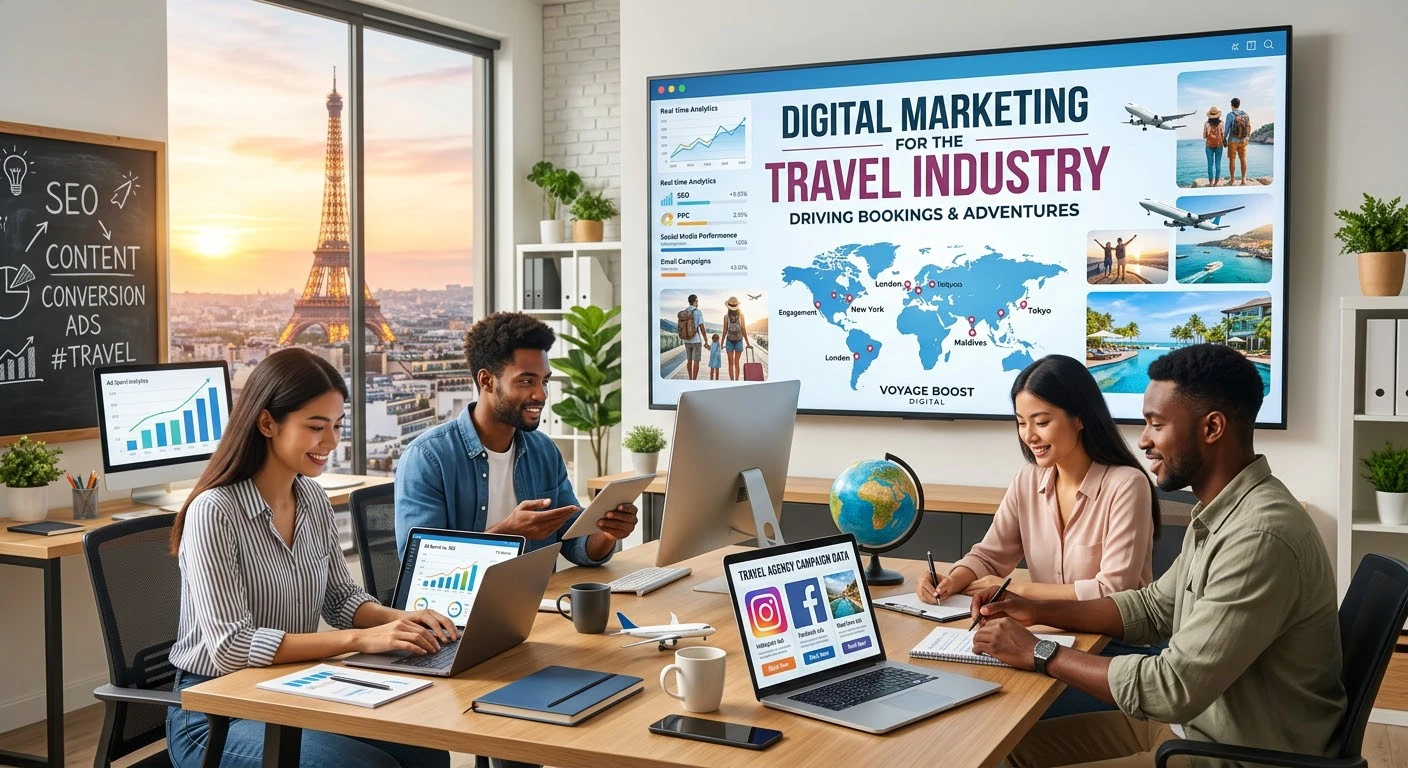
A tourist these days does not have to wait for a brochure or a friend’s recommendation. They do research on the internet, view videos, read reviews and compare prices prior to making a booking. This is why digital marketing for travel industry isn’t any longer simply optional. From travel agencies, hotels, tour companies or tourism boards, their online image determines whether travelers will opt for you or your competitor.
You’ll be learning about key components of travel industry digital marketing in this guide, so you can create a digital marketing strategy that will generate actual travel bookings and not simply clicks.
Why Is Travel Marketing Different?
Travel is an emotional, high dollar purchase. Humans dream for weeks, plan and compare for weeks before deciding to commit. Travel marketing needs to be a vehicle for the traveller at all times:
- Inspiration: Where do I want to go?
- Research: How much does it cost and what do I do there?
- Comparison: Which agency, hotel or package is the better?
- Availability: Do I have a choice of availability for my booking?
- Sharing: Will I be talking about this experience later?
A robust travel marketing strategy is present at every one of these moments with the proper message.
Core Components of Travel Digital Marketing
1. Travel SEO
Travel SEO ensures that your business can be found when people are searching for destinations, packages, hotels and tours. Although most visits start with a search engine, SEO (Search Engine Optimization) can be the most valuable long-term channel. Key steps include:
- By looking for keywords like tourism marketing and travel agency marketing in their own language (destination and package search words)
- Answering REAL traveler questions.
- A faster site and a good mobile experience.
- Earning backlinks from travel blogs, directories and local publications
Good travel industry SEO and tourism SEO attract visitors who have already worked up an appetite for travel.
2. Travel Content Marketing
Travel content marketing fosters trust by assisting travelers in their planning. Useful formats include:
- Travel guides and trailers.
- Tourism scripts and trips.
- Packing lists, visa guides and budget tips.
- This is a photo and video story about a real trip.
- Seasonal “best time to visit” articles.
Worthwhile material also helps with rankings and puts your brand in a better light when travellers are determining who they should book with.
4. Social Media Messaging
Travel is a field that is very visual, so social media is a natural choice. Travel social media marketing can assist you to:
- Use the short video and pictures to promote destinations.
- Share reviews of travelers and other user-generated content.
- Conduct give away and destination polls.
- Organize giveaways and destination polls.
- Take questions in the open to engender trust.
Inspire first and sell second. Rather than relentless promotions, people want content that would get them to want to travel.
4. Travel PPC Advertising
SEO requires some time, and travel PPC advertising provides quick outcomes. Works great for showcasing last-minute deals or new packages, or seasonal offers. Paid search and social ads allow you to target visitors by their location, interests, dates and past actions. Retargeting is particularly valuable, as there will be numerous people looking for a booking who visit several times.
5. Travel Email Marketing
Travel email marketing keeps you in touch with past and potential customers. You can use it for:
- Confirmations and pre-trip reminders.
- Personalized offers for previous destinations.
- Seasonal offers and early bird discounts.
- Feedback and requests for review after trips
It’s one of the top repeat booking and loyalty channels.
Travel Website Marketing and Optimization
Your website is your online storefront. The first step in a successful travel website marketing strategy is to have a user-friendly website. Priorities include:
- Quick loading times particularly on mobile devices.
- Explain package, pricing and contact information.
- An easy and reliable booker system.
- Beautiful photos and well written pages for destinations.
SEO and UX of travel websites go hand-in-hand. Having a site that ranks high but is difficult to book on will still lose customers at the final hurdle.
Travel Lead Generation and Booking Marketing
The ultimate purpose of all travel marketing is customers. The key areas of travel lead generation and travel booking marketing are:
- Clearly marked calls to action on all pages.
- Specialized pages with information about specific destinations or packages.
- The ability to fill out an easy inquiry form and the option to chat or text via WhatsApp.
- Retarget to visitors that did not book.
It’s quality not quantity. The most effective leads are travelers who are searching for what you have to offer.
Online Reputation and Reviews
Other travelers’ reviews are extremely important to travelers. Get positive reviews from Google, TripAdvisor and social media, and reply to all reviews in a professional manner. One of the most important trust signals in internet travel marketing is a stream of recent, positive reviews.
Destination and Hospitality Marketing
A city, region or country that is being promoted as a tourist destination. An effective destination marketing strategy will include a compelling story, local experiences, hotel and tour operator partnerships and a unified visual identity across all channels.
Creating a Successful Brand for Travel
The travel brand marketing is the glue that holds it all together. Ensure a consistent tone, images and message across your website, social media, ads and emails. If you consistently have a brand image, you create recognition and trust, which will make travellers pick you again and recommend you to their friends and family. Travel advertising and tourism advertising is best when it has a definite brand identity, not just individual advertisements.
Measuring What Works
Continue to monitor the numbers associated with revenue:
- Website traffic by source.
- Inquiries or bookings per visit.
- Cost per booking.
- Return on ad spend.
- The number of people opening and clicking on your emails.
Check these on a regular basis and adjust your budget to focus on channels that generate bookings.
FAQs
1. What does digital marketing mean for travel industry businesses?
It is the deployment of the internet channels like SEO, content, social media, paid ads and emails to bring in travelers, convert them to customers.
2. What is the best channel for travel marketing?
SEO and content can be powerful long-term marketing avenues, and PPC and social ads can get results sooner. The optimal approach is to use them together.
3. How much time does it take to see travel SEO results?
After some months, most businesses will see tangible results in terms of rankings, depending on consistency and competition.
4. Is social media a good tool for travel agencies?
Yes. Travel is visual and inspirational – social media is great at raising awareness and trust, particularly when combined with SEO and a well-designed web page.
5. Is it possible for small travel agencies to stand up to the large ones?
Yes. Local knowledge, tailored service, specific locations and high ratings are the things the small agency can excel at.
Conclusion
The secret to digital marketing is a combination of SEO, content, social media, paid ads, email and a powerful brand that are all aligned in a cohesive strategy for the travel industry. In an increasingly competitive environment, companies that take inspirers to booking, and then keep them engaged after that, get more bookings, and create long-term customer loyalty.