As a pest control business owner, you know that your business can only survive if your client calls you at the right time, right spot, and right place, when they see ants crawling down the kitchen sink or find termites in the attic. The reason why digital marketing for pest control is a different entity from marketing most other businesses. Your customers aren’t looking around aimlessly. They are panicking, looking on their phones and are prepared for any first name that looks credible and arrives.
This guide takes you through the specifics of creating a marketing system that will generate calls, bookings and repeat customers for your pest control business without you spending a fortune on tactics that will not have a measurable impact.
Pest Control Marketing
The marketing of pest control is not the same. The majority of home services have planned purchases. Pest control is generally a response measure. When someone sees a mouse, sees a wasp nest or observes termite damage, he or she is on Google in seconds seeking help. This need alters the marketing equation altogether.
Effective Pest Control Company Marketing
It is better to be quick than polished. A quick loading website with a clickable phone number is better than a pretty but slow website.
Trust is earned quickly. When someone lets a stranger into their house, reviews, licensing badges and local presence alert them of safety.
Location is everything. A search for “pest control near me” should propel your enterprise directly to the neighborhoods you provide services for. All of the strategies below will rely upon understanding these dynamics.
Local SEO
The backbone of pest control marketing is local SEO. Local SEO is the backbone of pest control marketing.
Pest control SEO offers one of the best ROIs for your company. Unlike ads, which stop working when the budget runs out, organic local rankings continue generating leads long after you pay for them.
Optimize Your Google Business Profile
A prospective customer’s first impression of your business is likely to be through your Google Business Profile. When trying to improve the local pest control SEO, ensure that you:
- Select the correct primary and secondary categories (Pest Control Service/Exterminator etc.).
- Include all of your service areas, not just your city.
- Add photos of your trucks, techs and finished projects.
- Update I regularly talk about pests, particularly seasonal pests (mosquito season, termite swarms, rodent activity in fall.
- Respond to all reviews (both positive and negative) professionally and promptly!
- Location Pages.
- Create location-specific landing pages.Create location-specific landing pages.
Don’t use one generic “service area” page if you have several cities or suburbs in which you work. Develop pages for each major city or region served with different information on pest pressures in the area. The typical thin service page will never beat a page tailored for a specific city that includes the local soil conditions, common regional pests, and neighborhood names. This is the essence of geo target optimization; aligning your content with the specific locations of your target customers.
Get Local Citations and Backlinks
Accurate name, address, and phone number (NAP) citations throughout directories such as Yelp, Angi, HomeAdvisor and BBB help to validate your business with Google. Home inspectors, real estate agents and property managers can also be a good resource to partner with for referral links, which enhances domain authority and establishes real referral relationships.
PPC Advertising
SEO takes time to develop the equity that it offers, whereas pest control PPC and pest control Google Ads campaigns can provide leads practically instantly, particularly during pest seasons or in competitive markets.
A Good Campaign Will
Use long-tail keywords, such as “emergency termite treatment” or “bed bug exterminator near me. Target mobile users that don’t want to visit a website with call-only ads Add location extensions and targeting by service area to make sure ads are served to prospects in the area.
The route also is directed towards new pages, as opposed to the homepage, which helps to boost the conversion rate. Track calls and form fills to be sure which keywords bring customers to your business. Pest emergencies occur seasonally, and planning ad spend accordingly can mean a huge return on ad spend, whether it’s around the time of termite swarming, mosquito season, or rodent season.
Website Optimization
Optimization for your website that brings in the customers. If there are no conversions, then there’s no money. The goal of optimizing pest control websites should be to eliminate any obstacle between a visitor and a phone call or booking.
Key Elements Include
- A click-to-call button that is clearly displayed on all pages, particularly on mobile devices.
- An online booking form or a quote request form which only takes a few minutes to fill out.
- Highlights within the first 100 words: licensing, years in business, guarantee, star ratings.
- High-quality content, as content is the most valuable aspect of any website.
- Remove or remove and destroy service areas for each pest (ants, termites, rodents, mosquitoes, bed bugs, wildlife)
A website that can answer the question “can I trust this company” and “how do I contact them” in 5 seconds will always beat a slower and more complicated site.
Authoritative Content Marketing
Pest control content marketing is not just about optimizing for search engines, it’s also about delivering the answers homeowners are seeking before they call anyone. The blogs, FAQs, and guides (e.g., “signs of a termite infestation” or “how to keep mice out of your garage this winter”) serve two functions: they help your company rank for organic search results, and they cement your company as the expert in your area.
Seasonal content does extremely well. Many pest control companies use a calendar schedule based on pests that might be present in your area throughout the year, such as ants in the spring, mosquitoes in the summer, rodents in the fall, and termites in the winter, to keep your website fresh and relevant all year round, providing your pest control marketing strategy with a continuous flow of content.
Social Media and Reputation Management
Social platforms will never be the lead source, but social media marketing for your pest control brand leads to more brand awareness and trust in your service area. Local homeowners viewing and sharing before and after pictures of treatments, introductions to the technicians, and tips on pest prevention work well on Facebook and Instagram.
Special attention should be drawn to the reviews. One of the best pest control lead strategies to generate is a fresh stream of new Google and Facebook reviews, because most homeowners do research on the ratings before they call someone to address their pest problem in the house. Follow-up request after service either a text or email message after any service will help improve response rates.
Why Marketing is not Enough and Needs to Become Customer Acquisition?
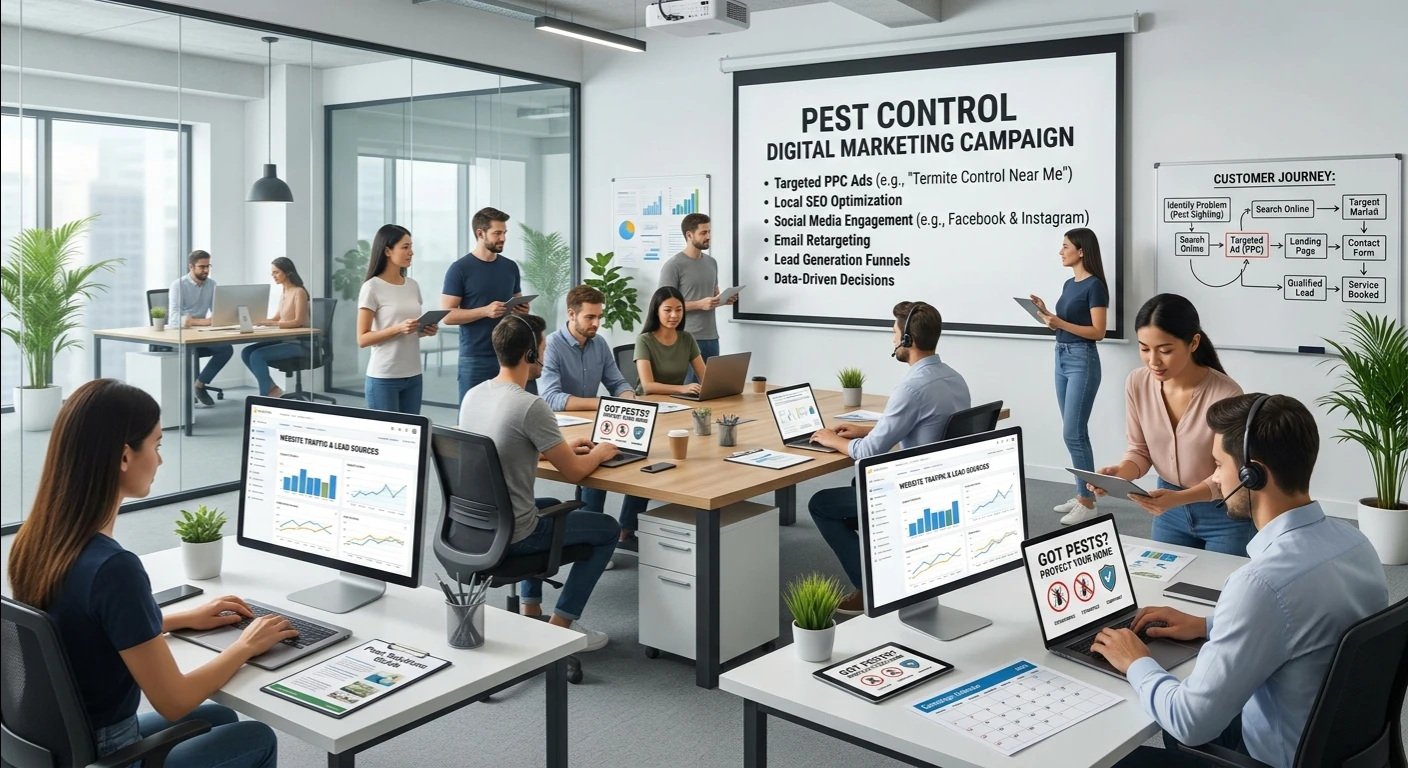
None of these channels are used alone, but in combination. Your Google Business Profile may be the first touchpoint they engage with and after reading a blog post about mosquito control, they may convert through a PPC ad a week later when the problem worsens, as a homeowner. This is why the multi-touch journey should be used to measure the acquisition of pest control customers, rather than just evaluating by one channel.
Effective Action to Bring All the Pieces Together
Track the success of each channel by using call tracking numbers on your website, ads and listings, and determine which ones are working to book jobs for you.
After each service call: set up automated review requests. Retarget those who visited your website without converting to customers, via retargeting ads
Remember former patients with seasonal reminders by email or text to schedule future treatments.
Final Thoughts
Instead of trying out every new strategy, digital marketing for pest control is all about the basics that accurately align with homeowner search and decision-making behaviors: strong local SEO, well-targeted PPC, a speedy and trustworthy website, informative content, and consistent reputation management. Businesses that integrate these factors with real geo-targeted optimization efforts always outperform competitors using ‘tossing out’ or generic advertising and result in increased local calls, booked jobs and repeat business.
Build your Google Business Profile and website foundation first, add PPC to get leads now and add local content in time. This is where the compound effect comes into play, as it is the combination of all these efforts that set apart “famous” pest control companies from the rest that just appear and disappear from the scene.
Grow your brand, attract more customers, and drive measurable results with Inceptial Logic’s powerful digital marketing services.