

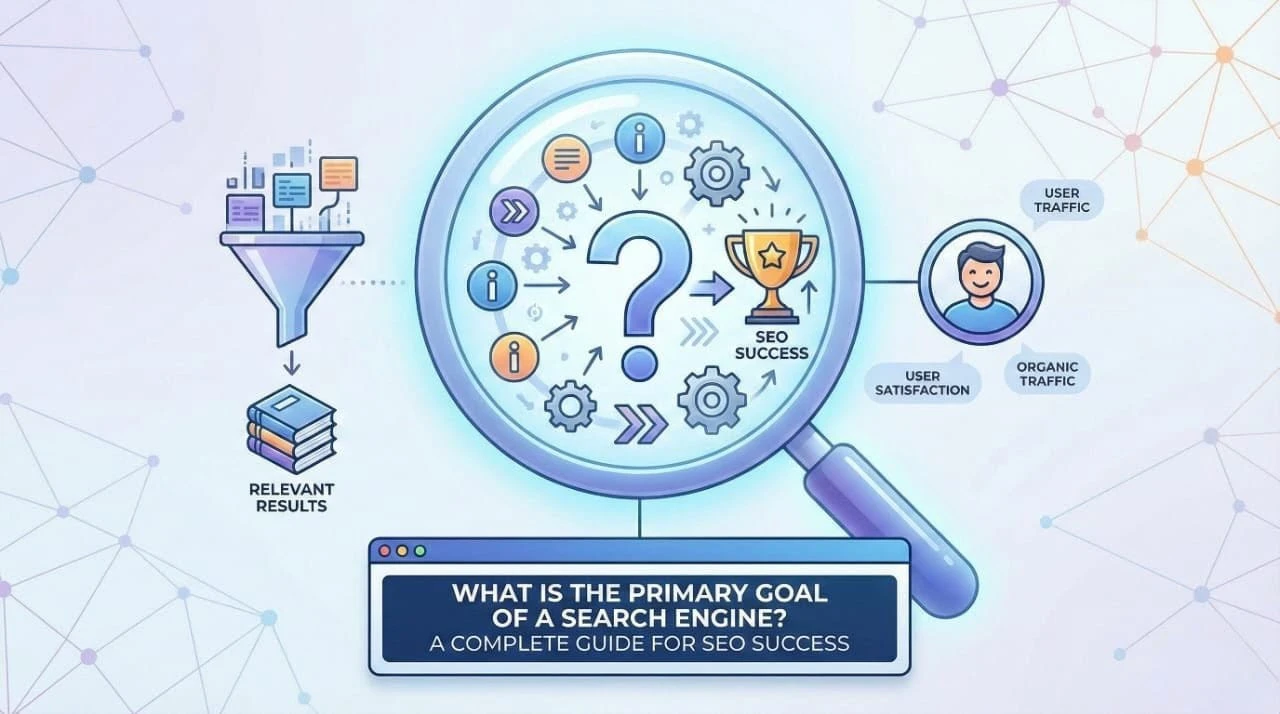
Understanding What Is The Primary Goal Of A Search Engine? is essential for building a strong SEO strategy. Search engines shape how users discover content, decide which websites deserve higher rankings, and ultimately influence how brands grow online. When you know how these systems operate, you can optimize your content more effectively and increase your overall visibility.
This guide looks closely at those purposes. It also shows how to use effective keyword research techniques. These techniques can help you get better organic search traffic. This will improve your strategy with the search engine.
Why The Primary Goal Of Search Engines Matters In SEO?
Once you understand the purpose of search engines, you can be able to create content that fits that purpose. Search engines have the interest of rewarding content that is useful, user-driven and well optimized. They punish misleading, bad-quality content or irrelevant content.
This explains why SEO is not tricky. The point is to make your content better to appear to the search engines as the most appropriate for a query.
With prioritization of search intent, clarity, expertise, and value, you will automatically achieve more organic visibility through your site.
How Search Engines Find the Best Results?
The search engines have sophisticated ranking mechanisms that consider web pages on the basis of hundreds of factors. The entire algorithm is confidential, but the main principles are apparent.
Relevance
The search engines will understand the similarity of your content to the search query of the user. When a user searches for the best running shoes for flat feet, a general shoe shop page won’t show up first. Instead, a specific article about flat foot support will rank higher in the search results.
Quality
To determine the quality of content, the search engines rely on such pointers as originality, depth, accuracy and expertise. Good content will respond to the queries of the users and give a good experience.
User Engagement
Search engines track the interaction of users with your content. When the users spend more time on your page, scroll or interact, it will indicate that your content is helpful.
Authority
Quick pages containing some back links, known authors and brand hints will have a boosting effect on the ranking. The fact that other individuals respect and value your material shows that authority is present.
Performance
The main reasons for the better rankings are fast page loading, mobile-friendly design, and a well-organized site structure.
When you align your content with these elements, then you have a chance to be closer to the final objective of the search engines.
How to Conduct Keyword Research for Better Organic SEO Traffic?
The keyword research is not a high volume of terms. It is about finding keywords that have real intent of the user and which you are able to rank in fact due to competition.
These are some of the ways that experts have proven to help you formulate better keyword strategies.
1. Focus On Search Intent
Search intent is related to the fact that a user is able to input a key word. It could be informational, navigational, commercial or transactional. The content matches the intent in the search engines.
2. Use Long Tail Keywords
Long tail are more particular, less competitive and are usually more converting. They help you to acquire users that have full knowledge of what they desire.
3. Competitor Keyword Analysis Competitors
Establish the keywords that the competitors are found using. This demonstrates the means through which you can enhance it and the gaps that they do not cover in their content that you can fill.You can discover these keywords in a few minutes using tools like Ahrefs, SEMrush, and Google Keyword Planner.
4. Auto Suggestions and Related Questions Research
Google Autosuggest and People Also Ask are direct keyboards, which are user-action-based. The utility of these is that they show the actual search behaviour.
It is also more effective in building whole topic clusters and supporting content to gain more topical authority.
5. Look at Keyword Difficulty
The issue of using keywords with high volume, but highly challenging is that it stifles your growth. Instead, focus on a medium competition and low competition combination of keywords. This will allow you to start ranking at a higher pace and create momentum.
6. Create Keyword Groups
Instead of attempting to optimize each of the pages with one keyword, formulate clusters of keywords. Cluster related keywords into a single content and generate a complete content on an issue. This improves relevance and assists in raising the visibility of the search engines.
7. Creation of Content that is Relevant to the Search Engine
Once you know what the search engine needs and how to pick the right keywords, the next step is to create valuable content.
8. Write Useful and Clear Material
Was likely to answer the query of the user in a fully comprehensive and straightforward way.
9. Use Logical Structure
Divide the contents into headings, short paragraphs and descriptive subheadings. This helps search engines understand what you are about and enhances consumer satisfaction.
10. Optimize For Readability
Simple language and straightforward style, active voice writing. Search engines reward this readable and easy-to-comprehend material.
11. Expand with Information and Examples
There would be the use of statistics, actual examples, and case studies that would make it credible and authoritative.
12. Keep Content Updated
The engines are enthusiastic about new and modern information. Continue doing what you need to do to maintain your ranking.
FAQs
1. What is the most desired thing a search engine can do?
Ans: The main purpose of a search engine is to provide users with accurate and helpful information. It analyzes the web pages based on quality and authority and relevance to settle on the most desirable results.
2. Why is it important to conduct keyword research in SEO?
Ans: The keyword search will help you to have an idea of what your audience wants. It guides your content strategy, helps you meet user needs, and boosts your chances to rank for important keywords.
3. What are the best research techniques for the keywords?
Ans: The most useful tools include understanding search intent, using long tail keywords, and analyzing competitors. They also involve researching autosuggestions, checking keyword difficulty, and grouping similar keyword phrases.
Conclusion
Knowing the main purpose of a search engine will help you create content that meets user needs and ranking standards. Use this knowledge along with effective keyword techniques. This will help you get better organic SEO traffic. You are building a strong foundation for long-term growth. Publish useful information that serves a purpose. Use meaningful keywords to gain lasting and free visibility.
Boost your website’s visibility—click here to get expert SEO services from Inceptial Logic!